WONACH SUCHST DU?
China has become one of the most important sourcing markets for solar inverters, offering a wide range of products for residential rooftops, commercial and industrial (C&I) projects, utility-scale solar plants, and off-grid applications. For international buyers, however, finding a suitable solar inverter manufacturer in China involves more than comparing prices or product specifications.
Different manufacturers specialize in different areas. Some focus on large-scale grid-connected inverters, while others concentrate on residential hybrid inverters, battery storage integration, or customized solar power systems. The right choice depends on project capacity, local grid requirements, operating conditions, technical support, and long-term supply reliability.
This guide compares the major Chinese solar inverter manufacturers, explains what international buyers should evaluate before placing an order, and introduces how PNG Solar PV supports solar projects through inverter products and integrated PV solutions.
There is no single best solar inverter manufacturer for every PV project. A company with extensive utility-scale experience may not be the most suitable choice for a distributor sourcing residential hybrid inverters. Similarly, a low-cost supplier may not offer the technical documentation or after-sales support required for a commercial installation.
For international buyers, the following Chinese manufacturers are worth including in an initial supplier comparison. Their business positioning and product focus should be evaluated against the actual project requirements rather than treated as a universal ranking.
| Manufacturer | Main Product Focus | Typical Buyer Considerations |
|---|---|---|
| Huawei Digital Power | String inverters, smart PV and energy storage solutions | Large commercial projects, digital energy management, and established global service networks. |
| Sungrow | String inverters, central inverters, and energy storage systems | Utility-scale PV plants, commercial installations, and integrated solar-plus-storage projects. |
| Ginlong Solis | Residential and commercial string inverters, hybrid solutions | Distributors and installers looking for a broad inverter portfolio. |
| Growatt | Residential, commercial, hybrid, and off-grid inverters | Residential solar markets, distributed generation, and energy storage applications. |
| GoodWe | Grid-connected, hybrid, and energy storage inverters | Residential and C&I projects requiring solar and battery integration. |
| Deye | Hybrid, grid-connected, and off-grid inverter solutions | Battery-based applications, backup power, and distributed solar installations. |
| Sineng Electric | String and central PV inverters, power conversion systems | Large commercial and utility-scale solar projects. |
| PN Solar PV (PNG Solar) | Hybrid inverters, PV modules, lithium batteries, and complete solar systems | Importers, distributors, installers, and project buyers seeking coordinated PV equipment sourcing. |
This comparison highlights an important distinction: not every company selling solar inverters operates with the same business model. Some manufacturers concentrate on inverter technology, while integrated solar suppliers can coordinate multiple components within one project. Buyers should confirm whether their prospective supplier manufactures the inverter itself, supplies products from partner factories, or provides complete system integration.
Understanding the differences between manufacturers helps buyers narrow their choices before requesting quotations. Product range, application experience, and support capabilities are usually more meaningful than company size alone.
Huawei and Sungrow are established names in the global solar inverter industry. Their portfolios cover large-scale PV applications, with products and solutions designed for commercial and utility-scale installations. Buyers considering these brands should compare the exact inverter model, grid compatibility, project service arrangements, and delivery requirements.
Solis, Growatt, GoodWe, and Deye have portfolios covering various residential and commercial applications. Depending on the model, buyers can evaluate grid-connected operation, hybrid functionality, battery compatibility, monitoring capabilities, and backup power options.
PN Solar PV offers a different sourcing approach. Hefei Pinergy Solar Technology Co., Ltd. was founded in 2017 and supplies solar panels, energy storage products, and solar power systems. Its product range includes low-voltage single-phase hybrid inverters from 3 kW to 10 kW and high-voltage three-phase hybrid inverters from 4 kW to 12 kW.
For buyers who need more than an individual inverter, PN Solar PV also provides access to coordinated solar equipment, including solar battery and energy storage products, PV modules, and complete solar system solutions.
Before selecting a supplier, define the technical and commercial requirements of the project. A clear specification makes it easier to compare quotations from different manufacturers and reduces the risk of purchasing equipment that cannot be used at the installation site.
Match the inverter type to the application.
Grid-tied inverters are designed to convert solar electricity for use in grid-connected systems. Hybrid inverters can coordinate solar generation, battery charging, and grid interaction, depending on their configuration. Off-grid inverters are intended for systems operating without a utility grid connection.
For projects that require energy storage and backup power, hybrid inverter compatibility is particularly important. Buyers should confirm battery voltage, charging and discharging limits, communication protocols, and supported battery management systems before ordering.
Check rated power and system capacity.
Inverter capacity should be selected according to the PV array size, expected load, battery configuration, and grid connection conditions. For example, a residential project may use a single-phase inverter, while a commercial installation may require three-phase equipment or multiple inverter units.
Do not select an inverter based only on its advertised kilowatt rating. Review maximum DC input voltage, MPPT operating range, input current, number of MPPT trackers, AC output characteristics, and permitted PV oversizing ratio.
Verify certification and local grid compliance.
Certification requirements differ between markets. European buyers may need to review applicable CE documentation, EN 50549 grid connection requirements, and relevant national grid codes. UK projects may require G98 or G99 compliance, while US projects should check applicable UL 1741 and IEEE 1547 requirements.
Always request the actual certificates and test reports for the specific model being purchased. A manufacturer's general statement about international certification is not a substitute for model-specific documentation.
Evaluate environmental performance.
Temperature, humidity, dust, and installation conditions can affect inverter operation. Projects in the Middle East and Africa may require particular attention to operating temperature, cooling design, enclosure protection, and installation ventilation.
For outdoor installations, check the IP protection rating and the manufacturer's temperature derating information. An inverter with a suitable enclosure rating still needs proper installation and maintenance.
Compare warranty and technical support.
A reliable supplier should provide clear warranty terms, installation documentation, troubleshooting guidance, spare parts arrangements, and a defined process for handling product failures. Buyers should also confirm whether remote monitoring and firmware updates are available for the selected model.
Hybrid inverters have become an important option for solar projects where electricity storage, backup power, and flexible energy management are required. Unlike conventional grid-tied inverters, a hybrid inverter can coordinate solar generation with a compatible battery system.
For example, a residential solar installation may use solar electricity during the day, store excess energy in batteries, and use stored electricity during periods of low solar production. Depending on the inverter design and system configuration, backup power may also be available during grid interruptions.
For commercial and industrial users, hybrid systems can help manage electricity consumption and support backup power requirements. The actual benefits depend on load profiles, battery capacity, electricity tariffs, and local grid conditions.
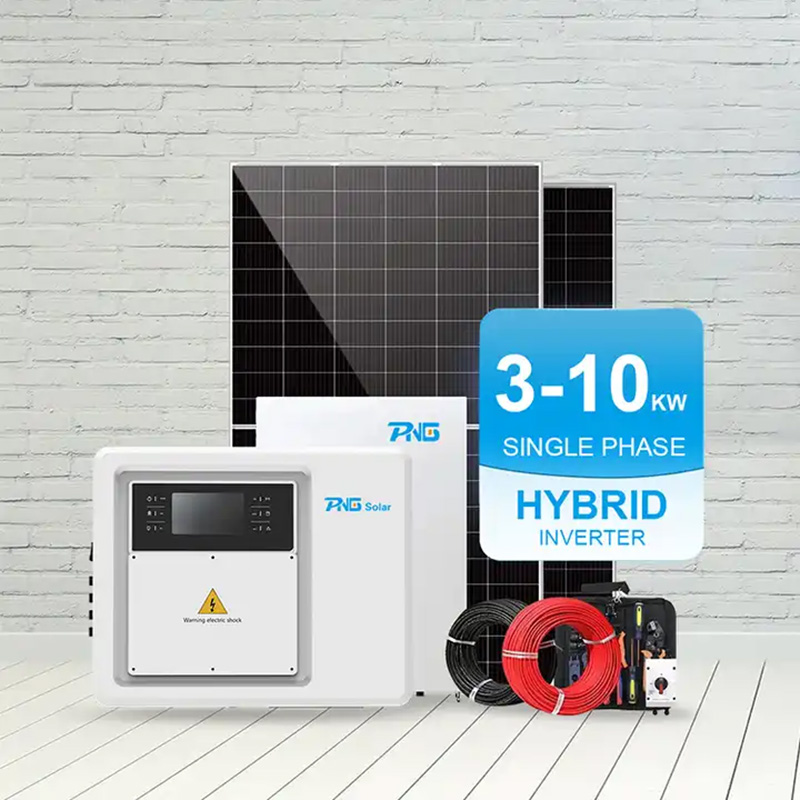
PN Solar PV supplies hybrid solar inverters for different residential and distributed solar applications. Its low-voltage single-phase range covers 3 kW to 10 kW, providing options for projects that require solar generation and battery integration.
When evaluating these products, buyers should review the model-specific specifications, including MPPT efficiency, battery voltage range, maximum charging current, communication interfaces, and backup output capability.
Low-voltage and high-voltage hybrid inverters serve different system configurations. The right option depends on battery design, power requirements, installation conditions, and compatibility with other equipment.
| Comparison Factor | Low-Voltage Hybrid Inverter | High-Voltage Hybrid Inverter |
|---|---|---|
| Battery configuration | Typically designed for low-voltage battery systems, such as 48 V-class applications. | Designed for compatible high-voltage battery systems. |
| Typical application | Residential solar and distributed energy storage. | Residential and selected larger installations, depending on model capacity. |
| System design | Requires appropriate low-voltage battery cabling and current management. | Requires compatible high-voltage battery modules and safety arrangements. |
| Key selection factor | Battery current, cable sizing, and BMS compatibility. | Battery voltage range, insulation requirements, and BMS compatibility. |
PN Solar PV provides both low-voltage and high-voltage hybrid inverter options. Its 3 kW–10 kW low-voltage single-phase hybrid inverter is intended for household applications, while its 4 kW–12 kW high-voltage three-phase hybrid inverter offers another configuration for projects requiring three-phase output.
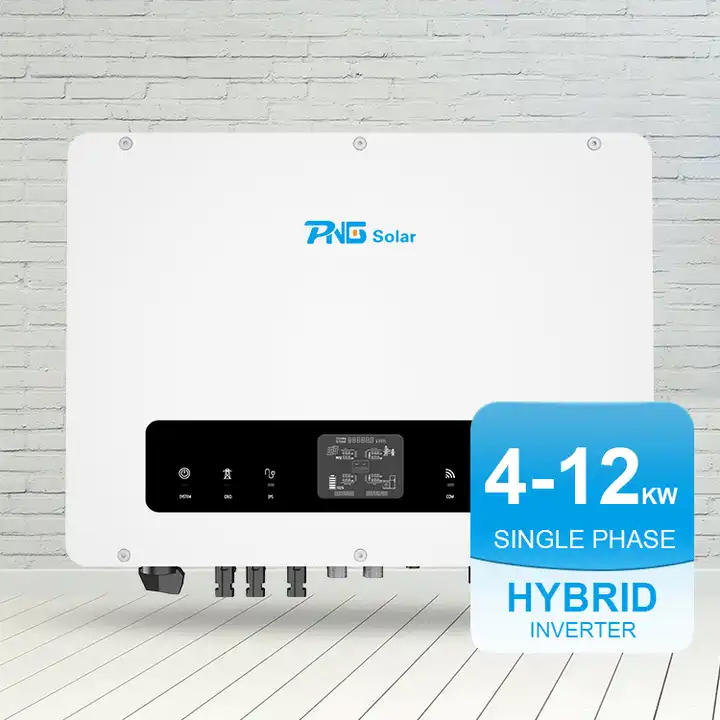
These ranges should not be treated as interchangeable. Buyers need to check the actual battery operating voltage, DC input parameters, output configuration, and supported communication protocols before confirming the equipment selection.
Two quotations can show similar inverter capacities but offer very different technical and commercial conditions. A structured comparison helps identify these differences before a purchase order is issued.
| Evaluation Item | Questions to Ask the Supplier |
|---|---|
| Product specifications | What are the rated output power, maximum DC voltage, MPPT range, and efficiency? |
| Battery compatibility | Which battery types and BMS communication protocols are supported? |
| Grid requirements | Does the inverter support the voltage, frequency, and grid code required in the destination market? |
| Certification | Can the supplier provide valid model-specific certificates and test reports? |
| Quality control | Are product testing records and inspection procedures available? |
| Delivery | What are the production lead time, MOQ, packaging method, and shipping arrangements? |
| Warranty | What is the standard warranty period, and what are the claim procedures? |
| Technical support | Are installation guidance, troubleshooting, and spare parts available? |
| Project customization | Can the supplier coordinate inverter, battery, solar panel, and system specifications? |
It is also useful to request a product datasheet, installation manual, wiring diagram, and sample quotation before making a final decision. For distributors and EPC contractors, these documents help the engineering and procurement teams evaluate the same technical requirements.
Solar inverter selection should account for the electrical standards and environmental conditions of the destination market. A product suitable for one country may require a different configuration or certification before it can be installed elsewhere.
Europe: Buyers should pay attention to grid connection requirements, CE-related documentation, national grid codes, battery compatibility, and energy management functions. Germany, the Netherlands, Italy, and other European markets may have different technical requirements for grid-connected installations.
Middle East: High ambient temperatures, dust, and strong solar radiation make thermal management and enclosure protection important considerations. Buyers should review inverter derating curves and installation requirements for hot climates.
Africa: In regions with unstable grid access or limited electricity infrastructure, off-grid and hybrid solar systems can be practical options. Battery compatibility, backup operation, local maintenance capability, and spare parts availability should be evaluated carefully.
North America: Buyers should verify the applicable electrical safety and interconnection requirements, including relevant UL standards and utility approval conditions. Monitoring, warranty support, and installer requirements also need attention.
For projects where solar generation and energy storage need to be sourced together, PN Solar PV offers off-grid solar system solutions and hybrid solar system solutions. These options can be evaluated according to local electricity conditions and project specifications.
Choosing a solar supplier is not only about purchasing one piece of equipment. For many importers, distributors, and EPC contractors, coordinating solar panels, inverters, batteries, and related accessories is equally important.
Hefei Pinergy Solar Technology Co., Ltd. (PNG Solar) was established in 2017 and operates in the solar PV and energy storage industry. The company provides a range of products and solutions for residential, commercial, and other solar applications.
Its product portfolio includes:
For buyers who need coordinated equipment sourcing, PN Solar PV can help connect different components within a project. Its solar power system solutions include configurations for residential and commercial applications.
For larger installations, the company also lists commercial and industrial hybrid energy storage systems in 100 kW, 150 kW, and 200 kW configurations. Buyers should request the detailed system configuration and confirm inverter specifications, battery capacity, and project-specific design requirements.
What makes a supplier worth considering is not simply the number of products listed in its catalog, but whether the products, documentation, delivery arrangements, and technical support match the buyer's actual project needs.
Before moving forward with a Chinese solar inverter supplier, buyers should prepare a technical inquiry rather than requesting only a general price list.
A useful inquiry should include the project location, intended application, required inverter capacity, single-phase or three-phase configuration, battery requirements, grid voltage and frequency, estimated order quantity, and applicable certification requirements.
For hybrid projects, also provide the battery chemistry, nominal voltage, required backup loads, and expected operating conditions. These details allow suppliers to recommend more suitable products and reduce unnecessary quotation revisions.
PN Solar PV welcomes inquiries from international distributors, solar installers, EPC contractors, and project developers. You can review the available solar inverter product range and contact the team to discuss product specifications, system configurations, and project requirements.
Which are the leading solar inverter manufacturers in China?
Major Chinese solar inverter manufacturers include Huawei Digital Power, Sungrow, Solis, Growatt, GoodWe, Deye, and Sineng Electric. The most suitable supplier depends on inverter type, project scale, certifications, technical requirements, and after-sales support.
How do I choose a reliable solar inverter manufacturer in China?
Compare product specifications, model-specific certifications, quality control procedures, warranty terms, production capacity, delivery arrangements, and technical support. Always request datasheets and test reports before placing an order.
What is the difference between a hybrid inverter and a grid-tied inverter?
A grid-tied inverter converts solar DC electricity into AC electricity for a grid-connected system. A hybrid inverter can also manage compatible battery storage and, depending on its design, provide backup power when the grid is unavailable.
What hybrid inverter capacities does PN Solar PV offer?
PN Solar PV lists low-voltage single-phase hybrid inverters from 3 kW to 10 kW and high-voltage three-phase hybrid inverters from 4 kW to 12 kW. Buyers should check individual model specifications for the exact electrical parameters.
Are Chinese solar inverters suitable for projects in Africa and the Middle East?
Yes, Chinese solar inverters are used in various international markets. However, buyers should verify operating temperature limits, dust protection, grid compatibility, battery support, and local certification requirements for each project.
Can I purchase solar panels, inverters, and batteries from one supplier?
Yes. Some integrated solar suppliers offer coordinated PV modules, inverters, lithium batteries, and complete solar systems. PN Solar PV provides these product categories, allowing buyers to discuss equipment sourcing and system configurations through one supplier.
What documents should I request before buying a solar inverter?
Request the product datasheet, installation manual, wiring diagram, applicable certificates, test reports, warranty policy, and quotation. For hybrid systems, also request battery compatibility information and BMS communication details.
Choosing the right solar inverter manufacturer in China requires a balance of technical performance, product suitability, certification, commercial terms, and long-term support. By comparing suppliers against actual project requirements, buyers can make more informed sourcing decisions and build more reliable solar installations.
Whether you are sourcing hybrid inverters, lithium batteries, solar panels, or complete PV systems, PNG Solar provides a range of solar products and project-oriented solutions for international buyers. Contact the team to discuss your requirements and find a suitable configuration for your next solar project.



Abonnieren Sie unseren Newsletter, um aktuelle Informationen, Werbung und Einblicke zu erhalten.

 Schreiben Sie uns eine E-Mail
Email : [email protected]
 Rufen Sie uns an
Tel : +8615606821994
Whatsapp : +8615606821994
 Adresse
No.6, Linquan East Road,Feidong New City Economic Development Zone, 231600 Hefei ,Anhui Province PRC.
© Hefei Pinergy Solar Technology Co., Ltd .Alle Rechte vorbehalten
. Seitenverzeichnis
| Blog | XML | Datenschutzrichtlinie
 NETZWERK UNTERSTÜTZT


